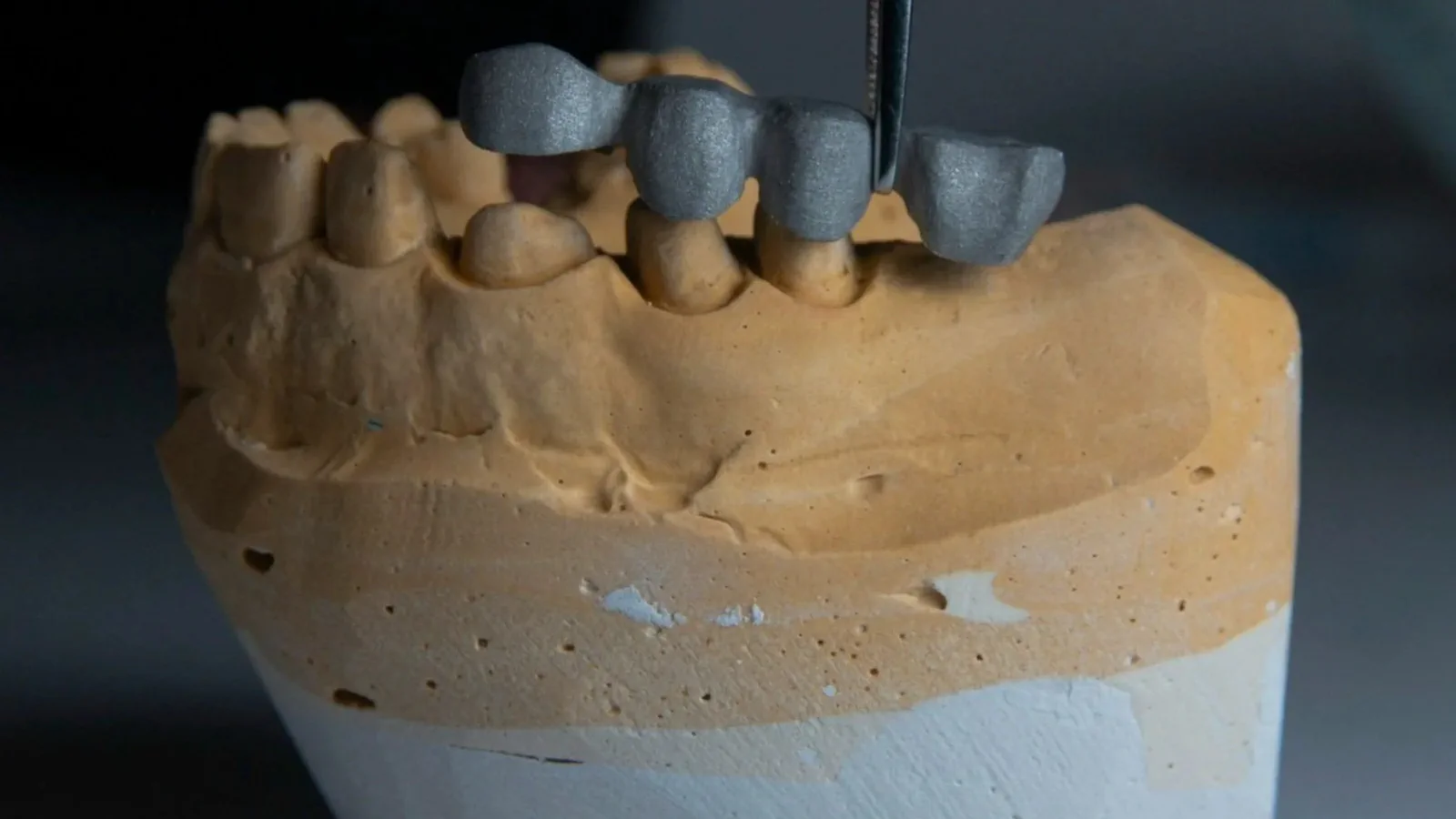
A missing tooth affects your ability to chew, changes your bite, and can shift your remaining teeth. A dental bridge is an effective, affordable solution that restores your smile and function by literally “bridging” the gap with an artificial tooth supported by your neighbouring teeth.
How Dental Bridges Work
A bridge consists of:
- Pontic — The artificial tooth (or teeth) in the middle
- Abutments — The crowns on either side that anchor to your natural teeth
The bridge is cemented permanently onto your teeth and doesn’t come out.
When is a Bridge Recommended?
Bridges are ideal when you have:
- One or more missing teeth — The pontic fills the gap
- Healthy teeth on both sides — These become anchor teeth
- Adequate bone support — Your jawbone has enough height to support the bridge
- Good oral hygiene — You can maintain the bridge with daily care
If you’re missing multiple teeth or the anchor teeth are weak, an implant or partial denture might be better.
Bridge vs. Implant: Which is Right?
| Feature | Bridge | Implant |
|---|---|---|
| Preparation | Grind adjacent teeth | No effect on adjacent teeth |
| Procedure | Faster (2 appointments) | Slower (3-6 months healing) |
| Cost | Less expensive | More expensive |
| Longevity | 5-15 years | 15-25 years |
| Anchor teeth | Healthy teeth ground down | Standalone tooth |
| Bone preservation | Relies on adjacent teeth | Preserves bone under implant |
| Maintenance | Special flossing needed | Normal flossing |
Both are excellent options. We’ll discuss which suits your situation best.
The Bridge Process
Consultation
We assess your missing tooth, examine the teeth on both sides, take X-rays, and discuss whether a bridge is suitable. If you’re interested in implants, we can discuss that option too.
Tooth Preparation (Appointment 1)
We numb the anchor teeth and prepare them for crowns. This involves removing a thin layer of enamel to make room for the crowns. We take an impression and place temporary bridges to protect your teeth.
Lab Fabrication
The lab creates your custom bridge—the artificial tooth is matched to your surrounding teeth in shade, shape, and contour.
Fitting (Appointment 2)
We try the bridge in your mouth, check the fit and bite, and make any adjustments. We then permanently cement it in place.
Caring for Your Bridge
Daily Home Care
- Brush normally — Brush all tooth surfaces including under the bridge
- Special flossing — Use a threader or water flosser to clean under the pontic. Flossing under the bridge is essential to prevent decay and gum disease.
- Avoid hard foods — Don’t chew ice or hard candy on the bridge
Regular Professional Care
- Check-ups — Visit every six months for professional cleaning
- Bite monitoring — We check your bite to ensure even pressure
- Longevity assessment — We monitor the anchor teeth and overall bridge condition
Potential Issues
Decay on Anchor Teeth
If decay develops under a bridge, it’s serious because treatment requires removing the entire bridge. This is why excellent home care is essential—especially flossing under the pontic.
Bridge Failure
If an anchor tooth develops a root canal or becomes severely compromised, the bridge may need replacement. This is rare with good care.
Gum Recession
Over time, gum recession can expose the edge of the crown, showing dark lines. This is usually cosmetic but can require new crowns if severe.
After Your Bridge is Placed
First week — Your bite may feel uneven temporarily. We can adjust this with small grinding. Avoid chewing on the bridge side for the first few days if possible.
One month — Most patients are completely comfortable with their bridge by now.
Regular visits — Schedule check-ups every six months to maintain your bridge.
Living with Your Bridge
A well-designed bridge restores your ability to eat, speak clearly, and smile confidently. With good home care and regular professional visits, your bridge can last 10-15 years or longer.
Related Services
The main alternative to a bridge is a dental implant, which doesn’t require grinding adjacent teeth and preserves bone. For removable replacement, dentures are a more affordable option. The crowns that anchor your bridge can be made with our CEREC same-day technology. Need a tooth extracted before a bridge? See our extractions page.
Missing a tooth and considering a bridge? Call us on 02 4936 2011 or book online to discuss your options. We’ll assess whether a bridge, implant, or another option suits your situation best.