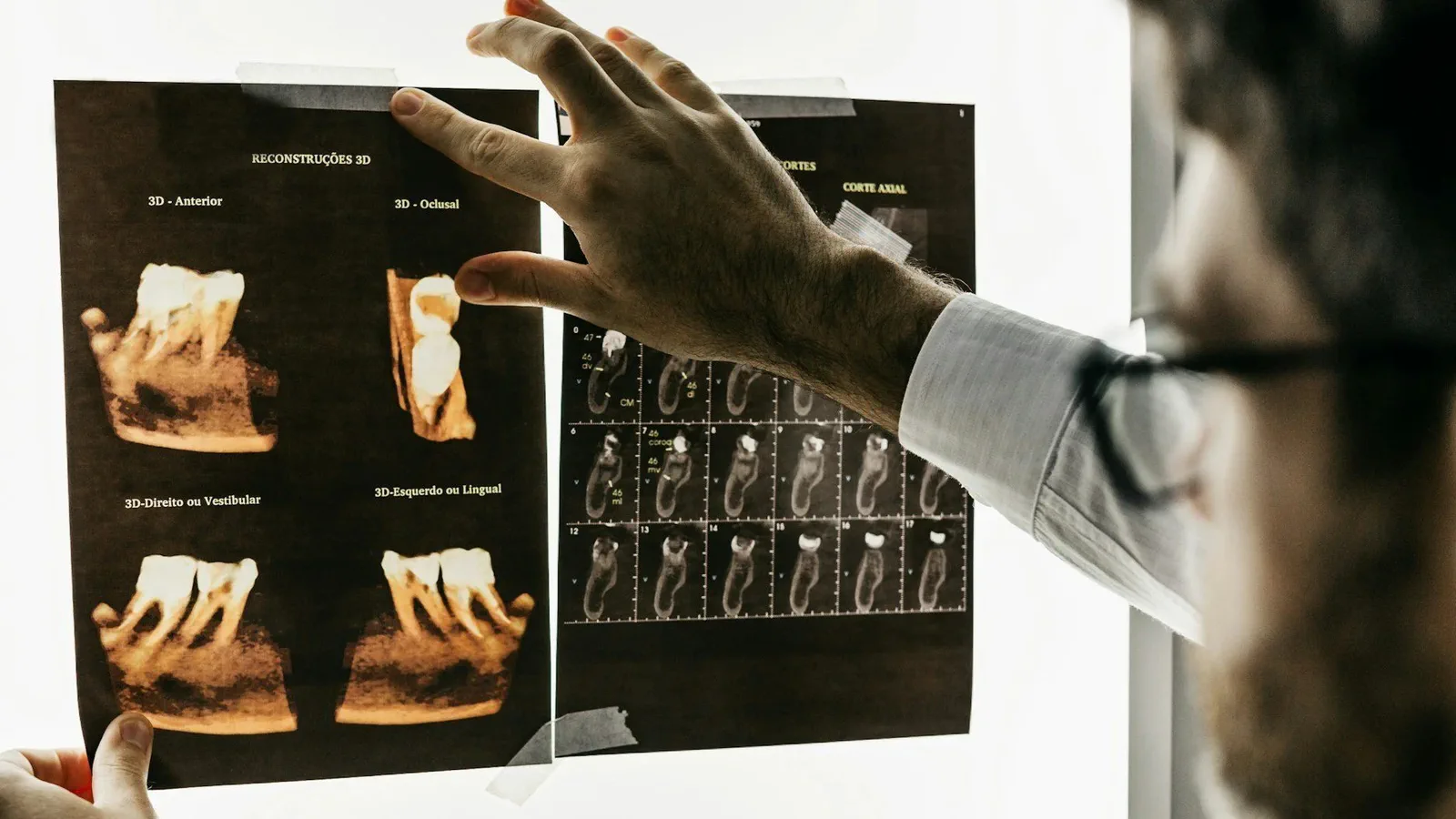
A tooth becomes infected or damaged when decay or trauma reaches the inner pulp chamber containing the nerve and blood vessels. Root canal therapy removes the infected pulp, stops the pain, and saves your tooth. It’s one of the most effective ways to preserve a tooth that would otherwise be lost.
When Do You Need a Root Canal?
Common signs and symptoms include:
- Severe toothache pain upon chewing or application of pressure
- Prolonged sensitivity to hot or cold temperatures
- Discolouration or darkening of the tooth
- Swelling and tenderness in nearby gums
- A persistent pimple-like bump on the gums near the problem tooth
- Abscess (pus pocket) that drains into the mouth or causes facial swelling
Not all of these symptoms mean you need a root canal, but if you have any, contact us promptly. Early treatment prevents complications.
What Causes the Need for Root Canal?
- Deep decay that reaches the pulp
- Repeated dental procedures on the tooth
- Faulty crowns or fillings
- Cracked or chipped teeth
- Trauma or injury to the tooth (even without visible damage)
The Root Canal Procedure
Diagnosis — X-rays help us confirm the diagnosis and plan treatment.
Local anaesthetic — We numb the tooth and surrounding area thoroughly.
Isolation — We place a rubber dam around the tooth to keep it dry and prevent contamination.
Access — We carefully access the pulp chamber by creating an opening in the tooth crown.
Pulp removal — Using special instruments called files, we carefully remove the infected or damaged pulp from the pulp chamber and root canals.
Cleaning and shaping — We clean and shape the canals, disinfecting them to remove bacteria.
Filling — We fill the canals with a rubber-like material called gutta-percha and an adhesive cement to seal the space.
Restoration — We close the access opening with a filling. Later, your tooth will likely need a crown for strength and protection.
Aftercare and Recovery
Your tooth may feel tender for a few days after treatment. This is normal. We recommend:
- Avoid chewing on the treated tooth until it’s restored with a crown
- Take over-the-counter pain relief if needed
- Avoid hard, sticky, or chewy foods
- Brush and floss gently around the treated tooth
Sensitivity to pressure typically resolves within a few days.
Save Your Tooth
Root canal therapy saves millions of teeth every year. While extraction is cheaper in the short term, keeping your natural tooth is usually the better long-term choice. Your natural tooth is always preferable to an implant or bridge in terms of function and bone preservation.
Success Rates
Root canal therapy has a high success rate (85-95%). Success depends on:
- Thorough cleaning and filling of the root canals
- Proper restoration with a crown
- Avoiding contamination during treatment
- Following aftercare instructions
Related Services
After root canal therapy, most teeth need a dental crown to restore strength — ask about our CEREC same-day crowns. If the tooth cannot be saved, extraction followed by a dental implant or bridge is an alternative. Prevent the need for root canals with regular check-ups.
Suspect you need a root canal? Call us on 02 4936 2011 or book online for an urgent appointment. Early treatment is essential to save your tooth.